
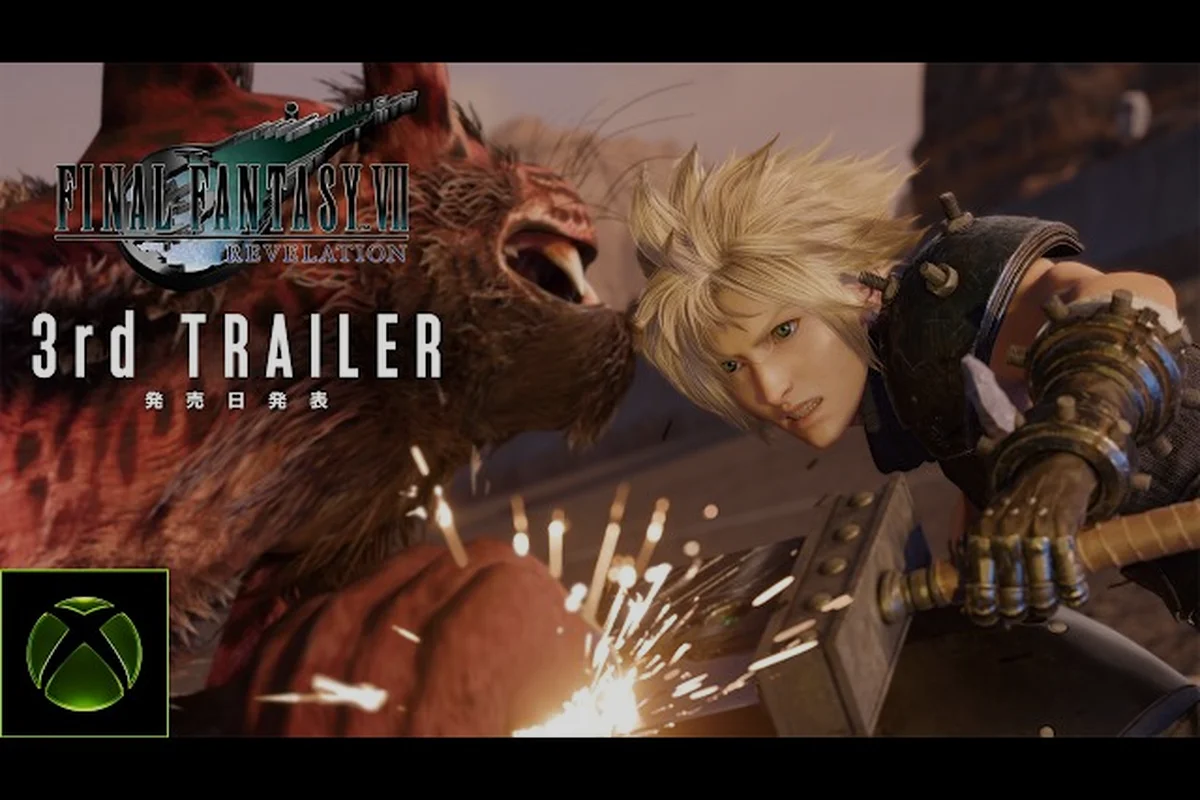
FINAL FANTASY VII REVELATION closes the Remake trilogy, and PC players are already asking what hardware the finale will demand. Square Enix has not published final numbers yet, but the official Steam listing, community discussion, and prior trilogy PC ports give us a clear picture of what to expect. Get the latest snapshot on FF7 Revelation system requirements, expected ultrawide behavior, and how to prep your rig before the April 8, 2027 release window. The full picture of Ff7 Revelation's PC behavior — including the new Ff7 Revelation Control Scheme for rebinding actions and tuning mouse-and-keyboard responsiveness — gives you a clear picture of what to expect, and the linked settings breakdown walks through how every binding maps from the controller default.
What Square Enix Has Officially Confirmed on the Steam Store
The official FINAL FANTASY VII REVELATION Steam store page currently shows system requirements as TBD (To Be Determined), with only two locked-in entries: the title requires a 64-bit processor and operating system, and the operating system line itself is marked TBD. That single line is the only official confirmation available as of the time of writing, but it already rules out 32-bit Windows builds and tells us Square Enix is treating this as a modern-only PC release.
What the Steam page does confirm is the feature set around the system requirements. Full controller support is listed, including DualSense and DualShock 4 gamepads. HDR is flagged as available. A Keyboard Only Option is documented, which is useful for players who do not own a pad and want to play entirely with mouse and keyboard. Steam Cloud and Trading Cards are also live. None of those features are unusual for a AAA PC release, but each one of them layers on top of the base hardware demands.
Until the official minimum and recommended tiers go live, PC players are leaning on two reference points. The first is the prior trilogy entries — REMAKE Intergrade and REBIRTH — which already shipped on PC and whose published specs serve as a realistic floor. The second is community extrapolation from the game's expanded scope. REVELATION adds larger planetary environments, the Highwind flight system, and a denser combat layer, all of which typically push demands above a straight remaster of existing content.
Confirmed vs. Expected Specs at a Glance
| Spec Category | Officially Confirmed | Community-Expected Baseline | Notes |
|---|---|---|---|
| OS | TBD (64-bit required) | Windows 10 64-bit / Windows 11 64-bit | 32-bit builds ruled out |
| Processor | Not listed | Intel i5-8400 / AMD Ryzen 5 1600 minimum | Based on prior trilogy PC ports |
| Memory | Not listed | 16 GB minimum, 32 GB recommended | UE5 streaming favors higher RAM |
| Graphics | Not listed | GTX 1070 / RX 580 minimum, RTX 2070 / RX 6700 XT recommended | HDR path needs stronger GPU |
| DirectX | Not listed | Version 12 | Standard for UE5-era PC titles |
| Storage | Not listed | 100 GB+ SSD strongly advised | Open-zone streaming punishes HDDs |
| Network | Not listed | Broadband required for DLC auth | Single-player core is offline |
Because the official numbers are TBD, the right move is to treat the community-expected column as a planning baseline rather than a final purchase trigger. If your PC sits at or above the recommended tier in that column, you are in good shape for launch.
FF7 Revelation PC Requirements Inferred From the Remake Trilogy
The smartest way to forecast FF7 Revelation PC requirements is to look at what REMAKE Intergrade and REBIRTH shipped with, then add a realistic buffer for REVELATION's expanded scope. REMAKE Intergrade launched on PC with a recommended spec of an Intel i7-8700 or AMD Ryzen 5 3600, 16 GB of RAM, and an RTX 2070 or Radeon RX 6600 for 1080p high settings. REBIRTH pushed those numbers higher because of denser open zones, recommending an RTX 3080 class card and 16 GB of RAM for smooth 1440p play.
REVELATION sits above both of those. The game combines a denser Midgar successor zone, fully open planetary traversal via the Highwind, and a sky-diving traversal loop that runs at the same fidelity as ground combat. None of that is news to the engine team, but it does push the recommended tier up a notch compared to REBIRTH. The realistic launch target is a Ryzen 7 5800X or Intel i7-12700 paired with an RTX 4070 or Radeon RX 7800 XT for 1440p at high settings, with an RTX 4080 as the comfortable 4K target.
Comparison With Prior Trilogy PC Releases
| Component | REMAKE Intergrade (PC) | REBIRTH (PC) | REVELATION (Expected) |
|---|---|---|---|
| CPU (Recommended) | i7-8700 / Ryzen 5 3600 | i7-10700 / Ryzen 7 3700X | i7-12700 / Ryzen 7 5800X |
| GPU (Recommended) | RTX 2070 / RX 6600 | RTX 3080 / RX 6800 XT | RTX 4070 / RX 7800 XT |
| RAM (Recommended) | 16 GB | 16 GB | 16 GB (32 GB for streaming-heavy zones) |
| Storage | 100 GB SSD | 150 GB SSD | 100–120 GB SSD (TBD) |
| Display Target | 1080p / 60 fps | 1440p / 60 fps | 1440p / 60 fps, 4K with scaling |
That table is the single most useful planning document a PC player can build right now. If your machine already handled REBIRTH at high settings, REVELATION will run on it with a settings tune-down. If your machine struggled with REBIRTH, this is the moment to plan an upgrade before the April 2027 window.
Why the Buffer Matters More Than Raw Teraflops
Raw GPU power tells you only part of the story. The new Highwind flight system streams planetary-scale assets on the fly, which means VRAM capacity becomes a hard ceiling rather than a soft preference. Cards with 8 GB of VRAM are likely to hit stutter on the recommended path, especially if you are also running HDR. 12 GB of VRAM is the comfortable floor for 1440p, and 16 GB is the right target for 4K or ultrawide play.
The same logic applies to storage speed. The trilogy moved aggressively to SSD-first design, and REVELATION inherits that pipeline. A SATA SSD is the minimum, but a NVMe drive removes a category of mid-zone hitches that mechanical drives simply cannot fix. If you are still loading REBIRTH from a hard drive, swapping in an NVMe SSD before launch will be the single highest-value upgrade you can make.
FF7 Revelation Minimum Requirements and Entry-Tier Builds
Minimum requirements describe the floor at which a game runs, not the floor at which it runs well. The official minimum tier is still TBD, but the community-expected minimum maps almost exactly to REMAKE Intergrade's launch spec, with a small bump for the expanded scope. That puts a realistic minimum at an Intel i5-8400 or AMD Ryzen 5 1600, 16 GB of RAM, and a GTX 1070 or Radeon RX 580.
That build will run REVELATION, but the experience will not match what the developers are targeting. Expect dynamic resolution drops during Highwind combat encounters, occasional texture pop-in during sky-diving segments, and a 30 fps cap on most settings presets. None of that is a deal-breaker — 30 fps is a perfectly playable target for a single-player RPG — but it is a clear signal that the minimum tier is the floor, not the goal.
Minimum vs. Recommended Build Snapshot
| Component | Expected Minimum | Expected Recommended | Expected 4K Target |
|---|---|---|---|
| CPU | i5-8400 / Ryzen 5 1600 | i7-12700 / Ryzen 7 5800X | i9-13900K / Ryzen 9 7900X |
| GPU | GTX 1070 / RX 580 | RTX 4070 / RX 7800 XT | RTX 4080 / RX 7900 XTX |
| RAM | 16 GB | 16 GB | 32 GB |
| Storage | 100 GB SSD | 100 GB NVMe SSD | 100 GB NVMe SSD |
| VRAM Target | 8 GB | 12 GB | 16 GB |
Players running older cards should not panic. DLSS and FSR support is highly likely given the engine lineage, and either upscaler can pull an older card into the recommended experience range with a small image-quality trade-off. We will confirm scaling support once Square Enix publishes the full spec sheet.
FF7 Revelation Recommended Requirements for Smooth 1440p Play
Recommended requirements describe the build Square Enix expects to deliver the experience as designed. For REVELATION, that tier lands in 1440p territory, which is the new sweet spot for PC gaming. A realistic recommended build pairs an Intel i7-12700 or AMD Ryzen 7 5800X with an RTX 4070 or Radeon RX 7800 XT, 16 GB of system RAM, and a NVMe SSD for asset streaming.
That tier is the target most PC players should plan around. It hits a stable 60 fps at 1440p on high settings, leaves enough headroom for HDR without dropping to medium, and absorbs the Highwind combat encounters that are most likely to spike CPU load. If you already play REBIRTH on a 1440p monitor and your average frame rate sits in the 50s, the recommended REVELATION build will feel like a clean generational step.
Recommended Spec Component Checklist
-
CPU: 8-core / 16-thread class, Zen 3 or Alder Lake and newer
-
GPU: 12 GB VRAM minimum, ray tracing optional at this tier
-
RAM: 16 GB dual-channel at 3200 MHz or faster
-
Storage: NVMe SSD with at least 100 GB free on launch day
-
PSU: 650 W for a mid-range GPU, 750 W+ for higher tiers
-
Cooling: Sustained boost clocks matter more than peak boost clocks
If you are building a fresh PC specifically for the REVELATION launch, this tier hits the best price-to-performance ratio. Spending more gets you 4K headroom, but it does not change the actual gameplay experience because the game itself caps design ambition at 60 fps for the campaign.
FF7 Revelation Best PC Settings and Performance Tuning
The official best settings for FF7 Revelation will land alongside the spec sheet, but a working knowledge of the engine and trilogy PC ports gives us a strong starting point. These are the settings PC players should expect to see in the in-game options menu, paired with the levers that actually move frame rate on REVELATION-class hardware.
Settings Priority and Expected Impact
| Setting | Expected Performance Cost | Recommended Tier Choice | Recommended Tier Choice |
|---|---|---|---|
| Resolution | Highest single cost | Native 1440p | Native 4K with DLSS Quality |
| Shadow Quality | High | High | Medium |
| Texture Quality | Medium (VRAM-bound) | High | High |
| Effects / Particle | High in combat | Medium | Medium |
| Anti-Aliasing | Medium | TAA or DLAA | DLAA |
| Ray Tracing Reflections | Very high (when present) | Off | Medium |
| Frame Rate Cap | Free (cap to your monitor refresh) | 60 | 60 |
| DLSS / FSR | Frees significant GPU budget | Quality | Balanced / Performance |
| HDR | Medium (GPU + display dependent) | On | On |
The single most important lever is upscaling. If the game ships with DLSS or FSR, that single setting can buy back 20 to 30 percent of your GPU budget for free. Pairing DLSS Quality with native 1440p looks nearly indistinguishable from native 1440p on a 12 GB card and unlocks a stable 60 fps budget that would otherwise require a hardware upgrade.
The second most important lever is shadow quality. The trilogy's shadow pass is one of the more expensive post-processing steps, and dropping it from High to Medium is usually invisible during combat but recovers a measurable slice of frame time. The third lever is effects and particle density, especially during limit breaks and summon sequences, which is where the engine traditionally spikes hardest.
Ultrawide and HDR Expectations
Community threads on the FINAL FANTASY VII REVELATION Steam Community hub are already active with ultrawide support questions, and the trilogy's PC port history sets a clear expectation. 21:9 ultrawide support is highly likely, because REBIRTH already shipped with full 21:9 support. 32:9 super-ultrawide at 7680x2160 is more of a coin flip — REBIRTH added official support post-launch, and REVELATION is expected to follow the same path with native support at launch or a day-one patch.
HDR is confirmed on the Steam store page. The trilogy's HDR implementation is competent but conservative, and the same pattern is likely to hold for REVELATION. PC players should expect a 1000-nit peak target on supported displays, with a calibration pass recommended during the first hour of play. Players running HDR400 monitors will see a real but modest improvement; players running HDR600 or HDR1000 displays will see the full benefit of the pass.
Storage, Cloud Saves, and Pre-Launch Prep
Final Fantasy 7 Revelation PC save data bonus plans from the prior trilogy carry over if your launcher is linked, and the same is likely to apply for REVELATION. That means your save file, unlocked chapters, and some bonus items will already be in place on day one, but the storage requirement for those save files is tiny. The 100 GB (or larger) figure floating in community estimates is for the game data itself, not the save files.
The pre-launch storage checklist is short. Make sure your install drive has at least 120 GB free to absorb any day-one patches, and make sure Steam Cloud is enabled in the launcher so your save data is backed up. Players running dual-boot systems should also verify that the REVELATION launcher entry is pointed at the right Windows partition before launch day, because a misrouted launcher can silently redownload assets to the wrong drive.
Frequently Asked Questions
What are the FF7 Revelation minimum requirements for PC?
The official minimum tier is still TBD on the Steam store page as of the time of writing, with only the 64-bit OS requirement confirmed. Based on the prior trilogy PC ports, a realistic minimum is an Intel i5-8400 or AMD Ryzen 5 1600, 16 GB of RAM, and a GTX 1070 or Radeon RX 580. Square Enix is expected to publish the official numbers closer to the April 8, 2027 launch window.
Will FF7 Revelation support ultrawide monitors?
Ultrawide support is highly likely based on the trilogy's PC port history. 21:9 (2560x1080, 3440x1440) support is expected at launch, and 32:9 (7680x2160) super-ultrawide support is expected to ship either at launch or via a day-one patch. Community discussion on the Steam Community hub is already tracking this, and players can expect confirmation when the full spec sheet drops.
Does FF7 Revelation support HDR on PC?
Yes. The Steam store page lists HDR as an available feature, which is consistent with the prior trilogy's PC releases. The HDR implementation is expected to be similar to REBIRTH, which supports a 1000-nit peak target on compatible displays. Players running HDR600 or HDR1000 monitors will see the strongest result, while HDR400 displays will see a more modest improvement.
How much storage will FF7 Revelation need on PC?
The exact figure is TBD, but the prior trilogy entries ranged from 100 GB to 150 GB on launch day. A realistic estimate for REVELATION is 100 to 120 GB, with extra space recommended for day-one patches. An NVMe SSD is strongly recommended because the open-zone streaming and Highwind flight system put sustained read pressure on the storage subsystem.
When will Square Enix publish the official FF7 Revelation system requirements?
The official minimum and recommended spec tiers are expected to drop closer to the April 8, 2027 release window, based on the launch cadence of the prior trilogy PC ports. Until then, the Steam store page is the only authoritative source, and PC players should treat the community-expected numbers as a planning baseline rather than a final purchase trigger.