
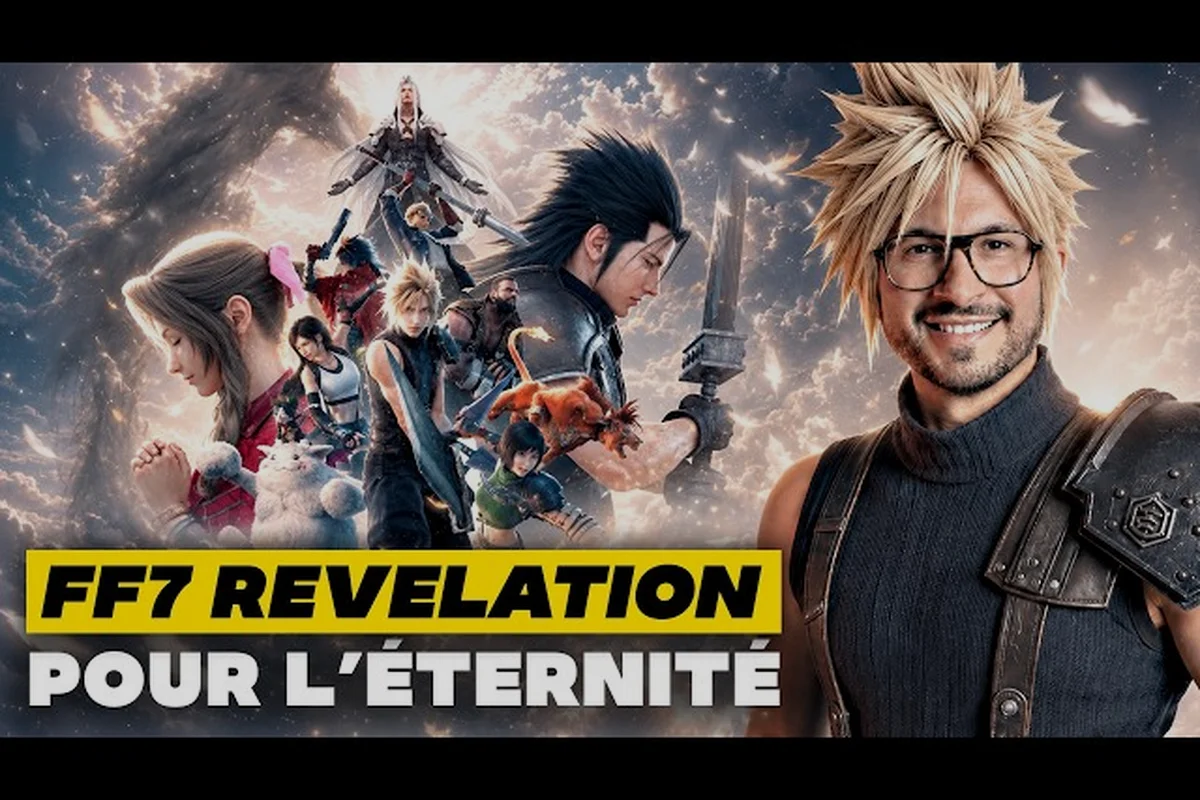
FINAL FANTASY VII REVELATION drops on April 8, 2027, and the pre-order window is already dividing the fanbase. With three digital editions, a separate physical release, and two story DLC episodes planned through 2028, deciding whether FF7 Revelation is worth it comes down to how much early access, bonus content, and post-launch story you actually want. This guide breaks down every version so you can pick the FF7 Revelation best edition for your budget without overpaying for cosmetics you will never use.
FF7 Revelation Editions at a Glance
Before comparing bonuses line by line, it helps to see the entire pricing structure side by side. The official storefront lists three digital tiers and one physical SKU, and each one targets a different type of player: completionists who want every DLC, lore fans who want the art book and soundtrack, and purists who only need the base campaign.
Pricing Snapshot
| Edition | Type | Price (SGD) | Early Access | Story DLC | Cosmetic/Collectible Items |
|---|---|---|---|---|---|
| Standard | Digital | S$97.90 | No | Sold separately | None |
| Premium | Digital | TBA (higher tier) | 24 hours | Story Expansion Pass (DLC 1 + 2) | None |
| Premium Plus | Digital | TBA (top tier) | 24 hours | Story Expansion Pass (DLC 1 + 2) | Digital Art Book, Digital Mini Soundtrack, Summoning Materia Polydroid Alexander, Nymphwing Bracelet, Risk Taker's Choker |
| Physical | Retail | Varies by region | No | Sold separately | None (disc + case only) |
Source: FINAL FANTASY VII REVELATION on Steam, verified September 4, 2026 — the Standard edition at S$97.90 SGD is the official Square Enix baseline, and all other tier pricing will be measured against this anchor as launch data stabilises across regions.
The pricing gap between Standard and Premium Plus is meaningful, so the rest of this article tests whether each upgrade is justified. If you only care about the base campaign and you do not plan to play the DLC, paying extra for story episodes you will never launch is wasted money. On the other hand, if you know you will finish the main story and want more, the Premium tier often beats buying DLC piecemeal.
Who Should Buy What
-
Standard: Players who want the campaign only, prefer physical media, or already pre-ordered the physical edition at a local retailer.
-
Premium: Players who want every story chapter and do not care about digital art books or mini soundtracks.
-
Premium Plus: Lore completionists who want the Digital Art Book, the Digital Mini Soundtrack, and the unique materia and accessory bundle.
-
Physical: Collectors who want a disc on the shelf and a Steam key inside, accepting that physical copies ship without digital bonuses.
Standard Edition: What You Get and What You Skip
The Standard Edition is the cheapest entry point and the cleanest way to answer the question "is FF7 Revelation worth it" for a player who has never played a mainline Final Fantasy title. You get the full base campaign, the Steam achievement set, and access to all post-launch balance patches. You do not get the 24-hour early access window, you do not get the Story Expansion Pass, and you do not get the Premium Plus cosmetic bundle.
Standard Edition Breakdown
| Content | Included? | Notes |
|---|---|---|
| Base game (April 8, 2027 launch) | Yes | Full campaign, all regions, all mainline endings |
| 24-hour early access (April 7, 2027, 14:00 UTC) | No | Locked to Premium and Premium Plus |
| Story DLC 1: Sephiroth | No | Sold individually, planned for Winter 2027 |
| Story DLC 2: Vincent & the Turks | No | Sold individually, planned for Spring 2028 |
| Digital Art Book | No | Premium Plus exclusive |
| Digital Mini Soundtrack | No | Premium Plus exclusive |
| Summoning Materia Polydroid Alexander | No | Premium Plus exclusive |
| Nymphwing Bracelet | No | Premium Plus exclusive |
| Risk Taker's Choker | No | Premium Plus exclusive |
| Post-launch patches and balance updates | Yes | Free for all editions |
According to the FINAL FANTASY VII REVELATION Steam store page, the Standard Edition is listed at S$97.90 in Singapore, which converts to roughly $69–$74 USD depending on regional exchange rates. Players in North America and Europe should see the local equivalent on their storefront after Square Enix confirms regional pricing closer to launch.
Is the Standard Edition Enough?
If you are a new player who wants to test the combat and materia systems before committing to DLC, the Standard Edition is the lowest-risk choice. You can always upgrade later by buying the Story Expansion Pass or the two DLC episodes individually once they release. Community sentiment on Steam Discussions suggests most first-time buyers lean Standard, then re-evaluate after finishing the main story. The materia system itself, detailed in our FF7 Revelation materia guide, has enough depth to carry a full playthrough without DLC, so the base game is not artificially truncated.
The one trade-off is early access. The 24-hour head start begins on April 7, 2027 at 14:00 UTC, which means Standard buyers will see spoilers, social media screenshots, and Twitch clips a full day before they can play. If you care about a clean, spoiler-free launch day, the Premium upgrade is the only way to participate in early access because Standard buyers do not receive a code.
Premium Edition: The Story Expansion Pass Question
The Premium Edition is the middle tier and exists for one reason: it bundles the Story Expansion Pass, which contains Story DLC 1: Sephiroth and Story DLC 2: Vincent & the Turks, alongside the 24-hour early access window. This is the edition to scrutinize most carefully because its value depends entirely on whether the two DLC episodes are worth the price difference over Standard.
Premium vs. Standard: Cost-Benefit Analysis
| Factor | Standard | Premium | Difference |
|---|---|---|---|
| Base game | Yes | Yes | Same |
| 24-hour early access | No | Yes | Premium only |
| Story DLC 1: Sephiroth | Buy separately | Included | Saves one DLC purchase |
| Story DLC 2: Vincent & the Turks | Buy separately | Included | Saves one DLC purchase |
| Digital Art Book | No | No | Neither |
| Digital Mini Soundtrack | No | No | Neither |
| Total DLC episodes covered | 0 of 2 | 2 of 2 | Premium is complete |
According to community data on Steam Community Discussions, the Story Expansion Pass is planned to roll out between Winter 2027 and Spring 2028, with each episode also sold individually after launch. That means a Standard buyer who wants both DLC episodes will end up paying two separate transactions, while a Premium buyer pays once at pre-order and is done.
Is the Story Expansion Pass Worth It?
The two DLC episodes are character-focused expansions. Story DLC 1: Sephiroth is positioned around the iconic antagonist and likely offers a prequel-style perspective on the main campaign's lore, while Story DLC 2: Vincent & the Turks centers on the optional party member Vincent Valentine and the Turks organization. Both are narrative expansions rather than gameplay overhauls, so their value depends on how much you care about FF7's character roster. If Sephiroth is your favorite character and Vincent is a long-requested addition, the Premium tier pays for itself.
For players who only enjoy the main cast and are indifferent to side content, the Premium upgrade is harder to justify. You would be paying for DLC that you might never launch, which is the same trap that hits many collector editions in the genre. The safe play is to wait for launch reviews of the base game, then decide whether Sephiroth's story chapter is essential to your FF7 experience.
Premium Plus Edition: Cosmetics, Collectibles, and the Collector Question
The Premium Plus Edition is the top digital tier and bundles everything Premium offers plus a Digital Art Book, a Digital Mini Soundtrack, and a small set of in-game items: Summoning Materia Polydroid Alexander, Nymphwing Bracelet, and Risk Taker's Choker. It is positioned as the FF7 Revelation collector edition for digital buyers, and its value depends almost entirely on how much weight you place on art books, soundtracks, and cosmetic accessories.
Premium Plus Bonus Item List
| Bonus | Type | In-Game Effect (per Steam listing) | Real-World Value |
|---|---|---|---|
| Digital Art Book | PDF/asset pack | None (out-of-game) | High for lore fans |
| Digital Mini Soundtrack | Audio files | None (out-of-game) | Medium-high for music fans |
| Summoning Materia Polydroid Alexander | Materia | Summon effect (Polydroid variant) | Cosmetic gameplay |
| Nymphwing Bracelet | Accessory | Equipment slot bonus | Cosmetic gameplay |
| Risk Taker's Choker | Accessory | Equipment slot bonus | Cosmetic gameplay |
Tallying the Premium Plus bonus stack against the table above, three of the five items (the Summoning Materia Polydroid Alexander, Nymphwing Bracelet, and Risk Taker's Choker) translate into purely cosmetic equipment-slot and materia effects once you boot up FINAL FANTASY VII REVELATION, while the Digital Art Book and Digital Mini Soundtrack live entirely outside the game client. That split is the real value question for anyone weighing whether the Premium Plus upgrade is worth it, because only the two non-game assets retain any lasting shelf life after you finish the main scenario, whereas the in-game trio is functionally equivalent to a mid-tier reward you could otherwise earn through normal progression in the Midgar and post-game content.
The three in-game items are described as equipment and materia bonuses rather than difficulty-altering power boosts, so they will not break the challenge curve. If you like collecting accessories and materia variants, the bundle is a nice extra, but skipping it will not lock you out of any meaningful content. The Digital Art Book and Digital Mini Soundtrack are the real draw, and they are the only items in the entire edition lineup that have collectible value beyond the game itself.
Should You Upgrade to Premium Plus?
The Premium Plus upgrade is the hardest sell in the lineup because its in-game items are decorative. If you have never bought a collector edition for art books or soundtracks in the past, you will probably not start with this one. However, two groups of players will find clear value: longtime FF7 fans who want the official art book as a memento, and players who want every cosmetic item the developers ship because they replay with different builds. For reference, our FF7 Revelation best summon materia guide covers how summon materia fits into long-term build planning, which is relevant if you plan to experiment with the Alexander Polydroid variant.
A third consideration is the question of FF7 Revelation physical edition. Square Enix has confirmed a physical release, but physical copies ship with the disc and a Steam key, with no digital bonus items. If you want a disc on the shelf and the Digital Art Book in your library, you cannot get both in one purchase, you will have to buy Premium Plus digitally and a physical copy separately, which is rarely cheaper than just buying Premium Plus alone.
Physical Edition: Disc, Case, and Retail Reality
The physical edition is a separate SKU from the three digital tiers and is sold through retailers rather than Steam. It contains the game disc, a Steam key inside the case, and standard retail packaging. It does not include early access, the Story Expansion Pass, or the Premium Plus digital bonuses.
Physical vs. Digital: Side-by-Side
| Feature | Physical Edition | Standard Digital | Premium Digital | Premium Plus Digital |
|---|---|---|---|---|
| Disc and case | Yes | No | No | No |
| Steam key | Yes | N/A | N/A | N/A |
| Early access | No | No | Yes | Yes |
| Story Expansion Pass | No | No | Yes | Yes |
| Digital Art Book | No | No | No | Yes |
| Digital Mini Soundtrack | No | No | No | Yes |
| Cosmetic items | No | No | No | Yes |
Who Should Buy Physical
The physical edition makes sense for collectors who want a box on the shelf, players in regions where credit card payment is inconvenient, and gamers who prefer to own a tangible copy. It does not make sense for players who want early access or DLC bundled in, because the physical SKU is treated like the Standard Edition in every functional respect. If you go physical, plan to buy the Story Expansion Pass separately once it goes on sale, or skip the DLC entirely if the base campaign is enough.
The other consideration is regional availability. The Steam page does not currently list every retail partner, so checking with your local game store closer to launch is the safest path. For broader launch planning, our FF7 Revelation best order of regions guide walks through how the campaign is structured, which is useful context if you want to know how long the base game lasts before deciding whether DLC is worth the upgrade.
FF7 Revelation Where to Buy and Pre-Order Strategy
Knowing which edition of Final Fantasy VII Revelation to buy is only half the question; the other half is where to buy it, because regional pricing on the Square Enix Store, retailer-specific bonuses like GameStop-exclusive art cards or Amazon pre-order steelbooks, and Steam's 2-hour/14-day refund window can each shift the final value by 15-25% depending on your region, platform account history, and whether you're double-dipping with a FF7 Remake or FF7 Rebirth save file transfer.
Pre-Order Channel Comparison
| Channel | Editions Available | Typical Bonus | Refund Window |
|---|---|---|---|
| Steam | Standard, Premium, Premium Plus | None (Square Enix has not announced a Steam-exclusive pre-order bonus) | 14 days, 2 hours playtime (Standard refund policy) |
| Square Enix Store | Standard, Premium, Premium Plus, sometimes physical | Possible wallpapers or avatars (varies by region) | Depends on region |
| Local retailers (Best Buy, GameStop, JB Hi-Fi, etc.) | Physical, occasionally digital codes | Possible retailer-exclusive art card or poster | Depends on retailer policy |
| Key reseller sites (G2A, CDKeys, etc.) | Standard, sometimes Premium | None | Often no refund |
According to community reports, the safest pre-order channel is the official Steam store because it guarantees the edition you select, integrates with Steam family sharing if you use it, and offers a 14-day refund window. Local retailers are a good choice for physical copies but rarely match Steam's refund flexibility, and key reseller sites are riskier because the keys are sometimes region-locked or sourced from bundle deals.
A Practical Pre-Order Checklist
-
Confirm your region: Steam pricing varies by region, and the S$97.90 Standard Edition price is Singapore-specific. Check your local storefront for the converted price.
-
Decide on early access: If spoiler-free launch day matters, Premium or Premium Plus is mandatory.
-
Decide on DLC: If you know you will play both story episodes, Premium or Premium Plus saves two transactions. If you might skip them, Standard is fine.
-
Decide on art book and soundtrack: If you want the Digital Art Book, Premium Plus is the only way to get it digitally.
-
Check your PC specs: Use our FF7 Revelation system requirements guide to confirm your hardware can run the game smoothly before paying for any tier.
Final Recommendation
For most players, the answer to "is FF7 Revelation worth it" comes down to two questions: do you want early access, and do you want both story DLC episodes. If the answer to both is no, buy Standard. If the answer to both is yes, buy Premium. Premium Plus only makes sense if you also want the Digital Art Book and Digital Mini Soundtrack, because the three in-game items are cosmetic and will not affect your playthrough.
The Standard Edition at S$97.90 is the cleanest test of whether the base game earns a sequel investment. The Premium tier is the value pick for completionists who already know they will play every DLC. The Premium Plus tier is for collectors who want art books and soundtracks as physical-style artifacts, even in digital form. The physical edition is for players who want a disc on the shelf and are willing to pay separately for DLC. Whichever path you choose, the launch window on April 8, 2027 is the moment when pre-order locks in.
Frequently Asked Questions
Is FF7 Revelation worth it at full price?
The base campaign is a full-priced mainline Final Fantasy release with the standard Square Enix production budget, so at S$97.90 / roughly $69–$74 USD, the Standard Edition is priced in line with comparable JRPGs. According to community sentiment on Steam Discussions, most players are waiting for launch-day reviews before committing, but the inclusion of post-launch patches in every edition means the base game is not stripped of content. If you finish the main story and want more, the Story Expansion Pass is sold separately, so the Standard Edition is a low-risk entry point.
Which FF7 Revelation edition should I buy?
Buy Standard if you only want the base campaign and prefer to evaluate DLC after launch. Buy Premium if you want both Story DLC episodes and the 24-hour early access window, which is the best value tier for completionists. Buy Premium Plus if you also want the Digital Art Book, Digital Mini Soundtrack, and the cosmetic materia and accessory bundle. Buy physical if you want a disc on the shelf and do not need early access or bundled DLC.
Does FF7 Revelation have a collector's edition?
There is no announced ultra-premium collector's edition with a figurine or steelbook at the time of writing. The Premium Plus Edition functions as the digital collector's edition because it bundles the Digital Art Book, Digital Mini Soundtrack, and three in-game items. For physical collectors, the physical SKU ships with a disc and case but no additional merchandise beyond standard retail packaging.
Can I upgrade from Standard to Premium later?
Yes, Square Enix has confirmed that the Story Expansion Pass and individual DLC episodes will be sold separately after launch. A Standard buyer can upgrade to Premium-equivalent coverage by purchasing the Story Expansion Pass, which bundles both DLC episodes at a discount compared to buying them individually. Note that you cannot retroactively buy the 24-hour early access window, so early access is a pre-order exclusive.
Is there a physical edition of FF7 Revelation?
Yes, a physical edition is confirmed for retail release. It contains the game disc, a Steam key, and standard packaging, with no early access and no bundled DLC. Physical buyers who want the Story Expansion Pass or Premium Plus bonuses will need to purchase a separate digital upgrade or a Premium / Premium Plus code, which is rarely cheaper than just buying the higher digital tier directly on Steam.